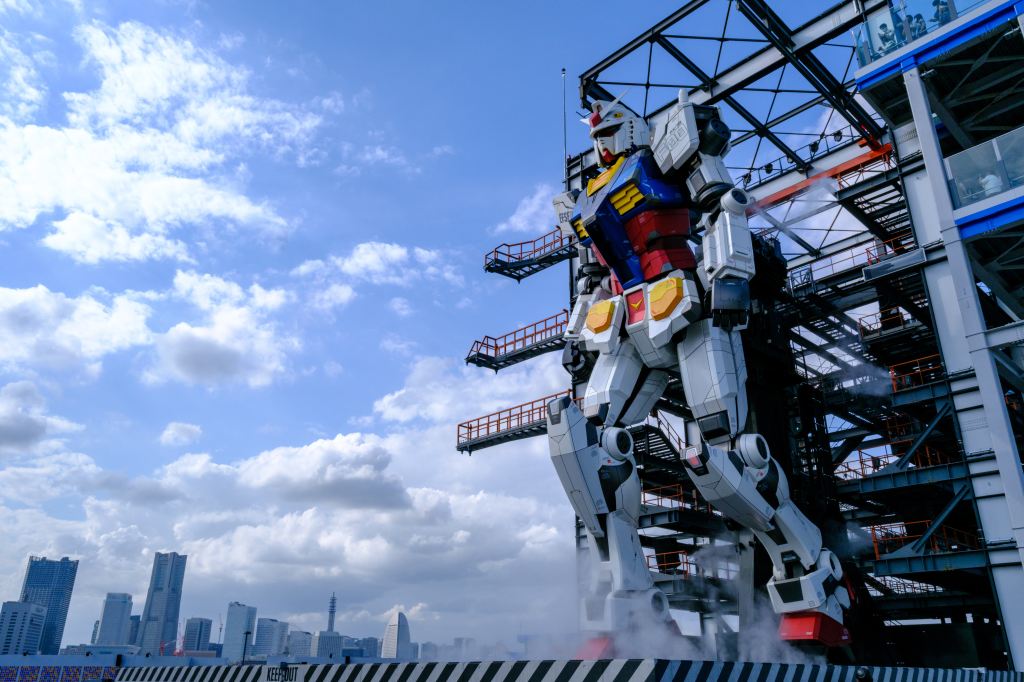
Welcome back to “The Games I Played in ____” where I write about the games that I’ve played in the past month. This is the third installment in this series, so if you’d like to see what I played last month, you can find that here. To quickly recap, the purpose of this series is to write a bit about each game I play, focusing on all the things I want to say about them that will likely never amount to their own standalone article.
Like I mentioned last month, I’m going to slightly change this up this month. I wanted to keep writing about games I’ve already covered in past articles because I wanted to see what I would write about the fourth or fifth time I would mention a game. Why am I still playing Street Fighter 6? What new have I learned in month four relative to month three? That kinda thing. As much as I initially wanted to do that, I also don’t want to spend four weeks writing this article every month. So as much as I wanted to initially do that, I think that may be better handled by writing an update on specific games I’m playing for long periods of time every few months or so. The “Sneak Peeks” section also feels kind of unnecessary as I don’t really have fully fleshed out thoughts on those games yet, so I’m going to axe that as well. In their place is going to be a quick list of other games I’ve played this month, just for the sake of completeness. Full write-ups will come once I feel like I have enough to say about them. That should help keep writing this column a little more manageable for me.
(Editor Angelo here, I’m aware I wrote over 1,500 words on Armored Core VI right after saying this and that this is the longest article in this series I’ve ever written. The irony is not lost on me.)
Let’s start with what’s new this month:
Armored Core VI: Fires of Rubicon (PlayStation 5)
Armored Core VI: Fires of Rubicon makes a great first impression. Veterans of the mecha-action series like me have been waiting for another entry in the series for over a decade at this point and initially, Armored Core VI felt like it was everything I was hoping for. Advances in technology allow for Armored Core VI to really deliver on fast-paced, adrenaline-pumping mecha action like no prior game in the series ever has. From Software’s experience with crafting incredible bosses and huge spectacle showpieces allow Armored Core VI to feel bigger and grander than the series ever has. And it retains the incredibly deep and diverse mecha customization and creation that I have always loved in the series.
For the first two chapters of Armored Core VI, I was absolutely thrilled. It played exactly like what I had hoped. It was, at its heart, still an old-school Armored Core game, but built to play on modern hardware and with a decade of From Software’s learning from Dark Souls. As you can see by looking at my first impressions last month, I was totally on board and having a blast with the game by that point. I had ended things right as I had gotten to the end of chapter one and the first big skill-check boss, Balteus.
Balteus has already become notorious online like most initial skill-check bosses in From Software games do. Balteus is a huge missile platform strapped onto an autonomous mech that throws approximately a billion missiles your way while sitting safely behind a massive plasma shield. Initially, the fight seems unfair and unbeatable. But the answer to besting Balteus is staring you in the face. If you go back to the garage and dig through the parts shop, careful reading of the weapon inventory will point to a handful of weapons specifically designed to shred plasma shields. If you go back to the garage and rebuild your Armored Core with that in mind, the fight becomes substantially easier. That plasma shield which previously prevented you from so much as denting Balteus is rendered completely useless, and you can finally start dishing out as much damage to Balteus as it’s able to dish out to you. It teaches you that the answer is always available to you in the garage and that careful reading of the situation will allow you to figure out the right tool for the job. This is precisely what I had hoped Armored Core VI would be, a game where I’d have to read the situation and adapt.
That is again enforced in the very next mission which presents you with a similar boss, the Smart Cleaner. The Smart Cleaner is basically Mr. Bucket, but in mecha form. The Smart Cleaner is heavily armored and resistant to damage, though there is a very conspicuous enormous steel cauldron on its back filled with molten metal. If you’re able to get up above the Smart Cleaner and shoot down into the cauldron, you’ll deal massive damage and nullify its armor. But it’s difficult to attack from that high of an angle. Fortunately, the garage has vertical missile launchers which rain down missiles from above, making it far easier to hit the inside of the cauldron. When I went back to the garage to swap out my shoulder weapons for vertical missile launchers, I realized there’s an even better strategy. I rebuilt my AC with tetrapod legs, which turned it into a four-legged spider mecha that could also temporarily hover in the air. This ability to hover allowed me to sit out of the range of all the Smart Cleaner’s attacks and rain down missiles and grenades from above. With this new build and strategy for the fight, Mr. Bucket goes down with little effort. This is great, I thought to myself. I love how this game is forcing me to assess the situation, look at my options, and then determine the best tool for the job.
Two missions later I come across the Sea Spider, which is a spider-like mecha similar to what I had built to take down the Smart Cleaner. I hit a brick wall against this boss. And I hit that wall harder than I have in years, even with something like Elden Ring releasing last year. Unlike the prior two bosses that had clearly telegraphed weaknesses or strategies I had to counter, there was no obvious gimmick to this fight. I couldn’t figure it out. It felt like pure spammy bullshit, like some of the more underwhelming late-game bosses in Elden Ring did.
This is where I should mention that Armored Core VI adds a stagger mechanic to the game like the one in Sekiro: Shadows Die Twice. The more damage you inflict to an enemy in a short period of time, the more their stagger meter builds. Build that up enough to fill the meter, and the enemy becomes staggered, halting their movement and opening them up to increased damage for a short window. This fight boiled down to solely if I could stagger the Sea Spider before it staggered me. Could I get my damage output above its damage output, and can I get my defensive stats up above its defensive stats? And yes, after retooling with stagger defense and damage output in mind, I cleared the boss within a few tries. It was brainless and kinda boring, but I guess this boss taught me the stagger system. Okay. I’m still excited to see what new tricks future bosses throw at me.
That was unfortunately the last time that Armored Core VI asked me to think.
From this point on in the game, that strategy worked for every single boss and arena battle in the game. The weapons I unlocked after the Sea Spider made quick and effortless work of every remaining challenge that Armored Core VI would throw at me. Every single boss was solved with the same brainless gameplan of holding down the triggers for my gatling guns and firing my grenade launchers as soon as they reloaded. All the depth, all of the variety in weapons and builds, none of it mattered. There was a single correct strategy for the remaining two-thirds of the game, and it entirely revolved around the stagger meter. Boss fights went from being these interesting skill and knowledge checks to boring, repetitive, and mindless filler.
I continually tried out other builds. I desperately wanted to build a more melee-focused AC, or a more nimble and agile AC built with evasion and quick hitting attacks in mind, but they all were terrible when compared to my brainless tank I dubbed the Boss Slayer. No other boss fight in the game (outside of one, where the game straight up forces you to equip a specific weapon) provided me any reason to vary from the Boss Slayer. Worse, none of them even seemed to have been made similarly to the Balteus or the Smart Cleaner fights. There were no gimmicks or situations to read that I ignored in favor of the Boss Slayer. Every boss from the Sea Spider forward solely revolved around the stagger mechanic. It was just hold down the triggers, strafe in a circle for some amount of time, stagger the boss, and boom, mission accomplished. After establishing that reading the scenario and finding the correct tool was the way to clear bosses early on, the game threw that entirely out of the window in favor mastering the very one-note and obviously solvable stagger mechanic.
I was super disappointed, especially because these battles looked, sounded, and felt epic in scale and scope. The spectacle of these fights were incredible and represented some of the best pure set pieces that From Software has ever made. But my god were they so boring, brainless, and ultimately, really anti-climactic. The Boss Slayer just made everything so easy.
Thankfully there are levels without boss battles, and those are the moments where Armored Core VI truly shines. You’ll go from needing a fast AC capable of quickly traveling across the map for long-range sniping to defend a tower in one mission, to building a nimble and stealthy AC to sneak through an enemy base in another. Hell, there’s a few levels that are straight-up platformers where you’ll need an AC capable of quickly traversing vertical spaces. This is where Armored Core VI delivers what I was hoping it would. This is where I got to dive into the enormous amount of customization options and build unique ACs that I might only play for that one level. But that’s why I enjoy the Armored Core series. There’s something uniquely satisfying about fiddling with little details for thirty minutes to perfect an AC that I needed for a single 10-minute level before moving on to a totally different challenge.
But then I run into a boss, bash my head into a brick wall for 15 attempts while trying to beat them with a more interesting Armored Core, and then pull out the Boss-Slayer and gun them down in 45 boring seconds.
Armored Core VI is not a bad game by any means. But I can’t help but be disappointed. As one of the rare people who felt like Elden Ring missed something that makes From Software games special, I was so excited when I found that missing element in the early parts of Armored Core VI. The potential that I felt in those first two chapters had me thinking that maybe Armored Core VI was going to surprise the hell out of me and somehow leap to the top of my Top 10 games of the year. But I’m walking away from it so underwhelmed. It’s a good game that is occasionally great. But it’s also very often boring and brainless. But even those boring and brainless boss fights are not forgettable. The music, the spectacle, and the story still shone through even when the gameplay didn’t live up to them. Is it my favorite game this year? Absolutely not. But it was a fun trip down memory lane as I got to experience the next chapter of a franchise that I’ve always enjoyed and had gone far too long without a new entry.
Recommended (even if it failed to totally live up to my expectations)
FAITH: The Unholy Trinity (PC)
I have played a lot of horror games in my life. I have watched more horror movies than I think 95% of people on this earth have. I have an entire bookshelf that is nothing but collections of spooky short stories and comics/manga. I tell you all this because I have never experienced a piece of media that is able to accomplish as much as FAITH: The Unholy Trinity does with so little. While modern horror games can accomplish things that I never thought possible as a child thanks to advancements in hardware and presentation, FAITH purposefully eschews all of those advancements. FAITH instead adopts the look, sound, and feel of an early-80’s PC or Atari game, complete with incredibly bit-crushed music and sound effects, rudimentary pixel art, an extremely limited color-palette, and simple gameplay. Cleverly, FAITH also branches out from the true limitations of an early 80’s PC game and uses a few other rudimentary technologies from that same time to great effect. Specifically, the rotoscoped animation used in the game’s downright chilling cutscenes and the extremely rough and disturbing lofi voice-synthesizer used for the game’s speech all add to the incredibly eerie and unearthly tone of this game. There is some truly terrifying stuff here (you’ve been warned if you’re clicking that link). This all adds up to something so much greater than the sum of its constituent parts. FAITH: The Unholy Trinity is an absolute masterpiece of indie horror.
Across three chapters, FAITH tells the story of a botched exorcism and how that night has affected the sole survivor, Father John Ward. Throughout those three chapters, we watch Father Ward revisit the scene of the exorcism a year later in a far too-late attempt to set things right, we learn that the events of the night were not as simple as we may have initially thought, and ultimately spend multiple nights traveling across Connecticut to slowly unravel the mysteries central to the story of FAITH. Just what happened on that fated night one year ago? What led to the poor victim, Amy Martin, being possessed in the first place? And just who the hell is Gary and why does the game keep telling me that he loves me?
FAITH: The Unholy Trinity reaches highs that very few other pieces of horror have been able to attain. Through my eight hours of playing and re-playing FAITH, I found myself feeling actual, true moments of fear which is a rarity for me. The horror within FAITH is so much more creative and disturbing than what you usually find in horror about demon possessions. This isn’t yet another piece of horror that’s aping on things from The Exorcist. The creativity that went into the storytelling in FAITH easily elevates it above other pieces of horror that deal with similar topics. Given its short length (all three chapters will take you under six hours to finish) and its simple presentation, it is quite possibly the single most efficient piece of horror I’ve ever experienced. And amongst the sea of indie horror titles, it stands out as one of the genre’s greatest successes.
Playing this game is one of those experiences that is going to stick with me for a while. If you are at all interested in a game like this, I cannot recommend it more highly.
Recommended (as long as you have a strong stomach, this one can get pretty gnarly at times)
F-Zero 99 (Nintendo Switch)
After 20 years, Nintendo has finally brought back F-Zero!
…as an online only, 99-player battle royale game. While I initially thought that this was a bit of a monkey’s paw situation, after playing F-Zero 99 I’ve got to say that this formula actually works pretty well. F-Zero was already a brutally difficult racing game to begin with. It was pretty common for me to not finish a race because I would either fall below the minimum ranking required to stay in the race, or I’d take so much damage my car would blow up, so the battle royal aspect fits really well. F-Zero was also always a super frantic and hectic racing game, so by upping the player count to an absurd 99 players, this game really leans into that frantic energy. Given that F-Zero 99 currently entirely uses tracks, music, and cars from the original SNES F-Zero, this does kind of feel like this is the multiplayer mode that game never had to begin with. The mash-up is successful, and the races are fun, fast, and frantic.
(Apologies for the alliteration. Sometimes I can’t help myself.)
So while that’s all said and good, I do worry about whether or not this game will have staying power. As it is, Nintendo has already shut down two of their past battle royale games (Mario 35 and Pac-Man 99), so there’s already a precedent of these games not sticking around for very long. And, at least at launch, F-Zero 99 really feels like it desperately needs some added variety. As of now, there are only four cars available, which I know is how many were available in the original F-Zero, but we’re talking about a 30-year-old launch SNES game. We kind of need a little more variety than that, I think. There’s also currently only seven tracks available and after the first week I’m already getting pretty tired of racing on Mute City I or Big Blue (despite how much of a bop the Big Blue theme is). When it comes to modes, there is always a single race available where the map is selected by player vote, which does become a bit of a problem when Mute City I and Big Blue when 90% of the votes they’re in. There’s also a second mode available that rotates between a selection of harder tracks (of which, I think there are three available to vote for), a team battle mode that is honestly awful, and then GP/Mini-GP. GPs and Mini-GPs are the real standouts, with GP doing a full five-track race and Mini-GP doing three. The problem is that those modes don’t come up all that often. They also require an in-game collectable ticket (or three, in the case of the full GP) to enter, which must be earned by grinding the other modes. If I’m already struggling to stay motivated to grind single races after a week, that doesn’t bode well.
But it’s free! Well, it’s free as long as you are a Nintendo Switch Online subscriber. I would absolutely not sign up for NSO just for this game, but if you already are a member and have fond memories of playing F-Zero back in the day, I think this is worth trying out. Especially because I have no idea if this will still be around in twelve months or not. Mario 35 only stuck around for six months, after all.
Edit: A few hours after publishing this article, there was an announcement of another five tracks being released tomorrow, 9/29. You’re welcome!
Recommended (as long as you already have a Nintendo Switch Online account, that is)
Labyrinthine (PC)
There is nothing I want more than for there to be a good co-operative survival horror game that I can play with friends online. I have dug through so much garbage trying to find a diamond in the rough that can satisfy my urge for another Resident Evil: Outbreak and sadly, Labyrinthine is yet another disappointment. I don’t want to be the guy who sits here and rants about a small indie game because I think it’s really cool that people are out there making games like this, but this one is just far too rough around the edges to be really enjoyable.
The concept behind Labyrinthine is that you and your friends all work at a spooky hedge maze. Upon your first night working at the park, you realize that something a bit spookier is going on here than what you’d find at your average Halloween-time haunted attraction. Upon venturing into the maze, you’ll eventually run into the first stalker monster. This is where Labyrinthine quickly falls apart. These monsters will kill you the moment you encounter them with no way of running away, hiding, or otherwise escaping them. I tend to enjoy so-called “hide-and-seek” horror games without combat like the Amnesia series, but they really only work if you can actually, you know, run and hide. Without that ability, the game feels very random and arbitrary, as you either get spotted by a monster and die, or you never encounter a monster and nothing happens. That’s not really what makes a horror game fun.
Then there are the boring and tedious puzzles. I love survival horror games as I do really love the puzzles, but the ones here are just not satisfying at all. The game is populated with some of the worst puzzles you could possibly encounter in a survival horror game. Within the first area alone, you’ll encounter a rage-inducing Lights Out-style puzzle, a boring “mix a poison” puzzle like in the original Resident Evil, a tedious and time-consuming trial-and-error “figure out the right order to click these buttons” puzzle, and the always fun, “walk around and look at stuff until you find the solution written on something” puzzle. This game is filled with the worst puzzles that pop-up in this genre with none of the really fun or interesting ones. Oh, and those instant-kill enemies? Yeah, they can spawn in the puzzle areas and kill you in the midst of you solving a puzzle, requiring you to navigate a visually indistinct and repetitive maze all over again just to try again.
Did I mention that there’s limited lives shared amongst your friends? No? Well, there are. And if you run out of lives, you just hit a game over screen and get to start all over again. Fun!
On the positive side, I will say that the music in this game is really good, including a real gem of a save room theme (which is another thing I love about survival horror games). Like I said, I applaud the developers for trying something cool here, but this just did not click with me at all, sadly. I had played this in Early Access way back in 2020 and was hoping that some of the kinks would be worked out now that it’s out of Early Access, but that turned out to not be the case. And as such, my quest to find a good cooperative survival horror game sadly continues.
Not recommended (even if you’re like me and are desperate to find a co-op survival horror game to play with your friends)
Late Night Mop (PC)
One of the problems with playing a lot of indie horror games is that you occasionally get burned and stumble across games that I’ll just refer to as “streamer bait”. If you’re also into indie horror games, you’ll know exactly what I mean, but if not, don’t worry, I’ll explain. These are games that get some positive buzz and get written about because they’re popular amongst Twitch streamers, but don’t ever really amount to anything other than some corny and lame jump scares. They are games basically designed solely around having moments for a streamer to over-react to and result in a thumbnail photo of the streamer doing a really hyperbolic, over-exaggerated face. I do not like these games, and I do not like the effect they have on the indie horror scene as a whole. As games like this tend to get more publicity than actually great horror games (see the ubiquity of something like Five Nights at Freddy’s versus FAITH), they can often turn people off of the genre entirely.
Late Night Mop is one of those games. I was looking around online for good haunted house games and I saw this come up on multiple lists. Like I said above with Labyrinthine, I don’t want to be the person who just sits here dunking on indie devs, but man this game just did absolutely nothing for me. Significantly less so than Labyrinthine. While Labyrinthine tried to do something interesting and was unsuccessful, Late Night Mop doesn’t feel like it’s trying to do anything. The premise is that you get called to clean a house late at night and some super telegraphed jump scares and bare bones gameplay ensue. The whole thing can be finished in under 10 minutes, with another 10 minutes being required to unlock the remaining two endings. There is nothing to it. There’s no deeper lore, no interesting ideas, nothing. Just a really lame looking demon thing that pops up and screams a few times.
Late Night Mop is entirely forgettable and passable. There’s so little to it that I can’t really think of who this would actually appeal to outside of someone looking to get some tweens to click on a YouTube video. I guess the best thing I can say about it is that it can be played for free, but even then, there are far better free games available on Itch.io.
Not recommended (unless you’re a streamer looking to make yet another screamer-bait video)
Phasmophobia (PC)
Phasmophobia is another one of the games that helped me get through the pandemic, much like Animal Crossing: New Horizons. I picked it up pretty shortly after it went into Early Access release in fall of 2020 and it quickly became a game that I regularly played with my wife and friends weekly. The premise is pretty straightforward, with up to four players each playing a different ghost hunter being dispatched to identify what kind of spirit is haunting a different location. Players then work collaboratively to gather enough evidence to identify the ghost before they are all picked off and killed one-by-one. What really helps push the gameplay over the top is the game’s proximity voice chat. This largely limits players to only being able to talk to other players within earshot unless they use the in-game radio, which frequently goes out thanks to the meddling ghosts. This adds an additional level of panic and anxiety to the game as you’ll never know what’s happening or who’s being hunted once the radio goes silent.
Despite still technically being an Early Access title on Steam, Phasmophobia is more fully featured than many full release games I’ve played. And it has received a huge amount of support in the past three years. New tools, maps, and ghost types have been added. Completely new mechanics like cursed objects have been added to add replayability to hunts and add some extra difficulty if things are getting a bit routine. The game has also seen multiple entire overhauls, with the game currently looking and playing quite differently than how it did when it first released. The usual red flags that I have with Early Access games are not here, and I’m sure that this game will continue to be heavily supported even after its 1.0 release (whenever that finally occurs).
Really the only thing that would prevent me from a blanket recommendation of Phasmophobia is the fact that it’s best played in a group. I’ve never played with random matchmaking, instead always playing with a full team of friends and family. As such, I’m unsure what the random lobby community is like, or how the game feels when the person flipping out next to you is a random stranger and not your sister-in-law. If you can regularly get a full group of four friends together though, I can guarantee that this will be an extremely good time this Spooky Season. If you’re going it alone, your mileage may vary, so maybe do a bit more digging into the single-player experience before diving in.
Recommended (get some like-minded friends together and you’ll have an absolute blast)
Resident Evil 4: Separate Ways (2023) (PlayStation 5)
If you really pushed me to give you a definitive answer, I think I’d say that the original Resident Evil 4 is my favorite game of all-time. Now, I generally don’t like boiling games down like that and trying to reduce all of what I love about games into one single “favorite game of all-time” feels really reductive. There are games like Silent Hill 2, which tell a story that moved me more than most pieces of art do, games like The Legend of Zelda: Breath of the Wild which perfectly capture the feeling of embarking on an epic adventure, and there are games like Super Smash Brothers Melee or Street Fighter 2 that I’ve spent hundreds of hours playing with friends. But when I think about what game I keep coming back to, the game that I’ve booted up and played on almost every console or PC I’ve owned, it’s Resident Evil 4.
(It’s also Resident Evil Remake, if I’m being fully honest, but for the sake of this, let’s just focus on RE4)
That’s why this year’s remake of Resident Evil 4 is such a stunning accomplishment to me. My hopes and expectations for this game felt impossible to live up to, and yet, somehow it did. And I can’t fully say this as I haven’t played 2023’s Resident Evil 4 as many times or for as long as I’ve played 2005’s Resident Evil 4, but the fact that I’m even sitting here thinking that I might prefer the remake over the original is shocking to me. One of the few things that gave me pause from outright saying that (outside of the hindsight I need to make that statement but don’t yet have), is that the remake did leave out a few things that I really loved about the original. The gondola ride section. The cheesy laser hallway. The boss fight with “It”. As much as I loved everything the remake did, there were still sections that I wanted to see with that new coat of paint. As much as the remake exceeded my wildest dreams, there were still little pieces of the original game that I missed.
Well, that was before the Separate Ways DLC for Resident Evil 4 released. The original Separate Ways came with the PlayStation 2 port of the original Resident Evil 4 and focused on Ada Wong’s adventures in the unnamed Spanish village that was happening alongside of Leon’s adventure in the main game. Of course, despite me being in college at the time and having limited money available, I bought the PS2 port of RE4 just for this new mode and I was honestly pretty disappointed. The original Separate Ways felt like exactly what it was, a rushed side mode thrown together with reused assets to justify selling the PS2 port to people like me who had already owned the GameCube original. Most of the original Separate Ways felt like playing the same game, but with small little tweaks here and there (outside of that awful room where you had to fight a goddamn battleship, but holy shit that was not fun at all). It was wholly forgettable and, honestly, most times I boot up the original Resident Evil 4, I wind up not touching Separate Ways.
The remake of Separate Ways however, is a completely new and different experience. Capcom wisely tossed nearly all of the original Separate Ways aside and instead crafted a new adventure for Ada that smartly and wisely repurposes much of what was cut from the original game and finally brings those moments into the remake’s new world. All of those moments I mentioned missing in the base game? Yeah, they’re here. Much to my surprise, they even found a way to smartly work a boss fight that got cut from the Resident Evil 3 remake into this DLC. And it doesn’t feel like they just tossed that old cut content in here willy-nilly, either. The way it’s all worked in here is so smart and so well done, it feels more like that content was purposefully left aside for Ada’s adventure, rather than Ada’s side story being built entirely out of the things that players missed from the original game. This feels deliberate and well thought out.
And they also added awesome new stuff that wasn’t in either the original Resident Evil 4 or Separate Ways either. Much like how the Resident Evil 4 remake managed to surprise me, Separate Ways found a way to do the same. For only $10, I am shocked by just how much there is to this DLC and how much this adds to an already incredible game. If I now sit back and look at the full scale and scope of the remake of Resident Evil 4, I’m even more shocked now than I was when I first played it. Capcom found a way to go ahead and remake my favorite game ever and make something that totally stands up to that original game. And honestly, they may have somehow surpassed it. Only time will tell…
Recommended (as I know I will be playing this game and this DLC for years and years to come)
Other Games!
- Inside the Backrooms (PC)
- Lies of P (PlayStation 5)
- Remnant Records (PC)
- Street Fighter 6 (PlayStation 5)


 The Cult Classic
Leave a reply to The Games I Played in October, 2023 – The Cult Classic Cancel reply